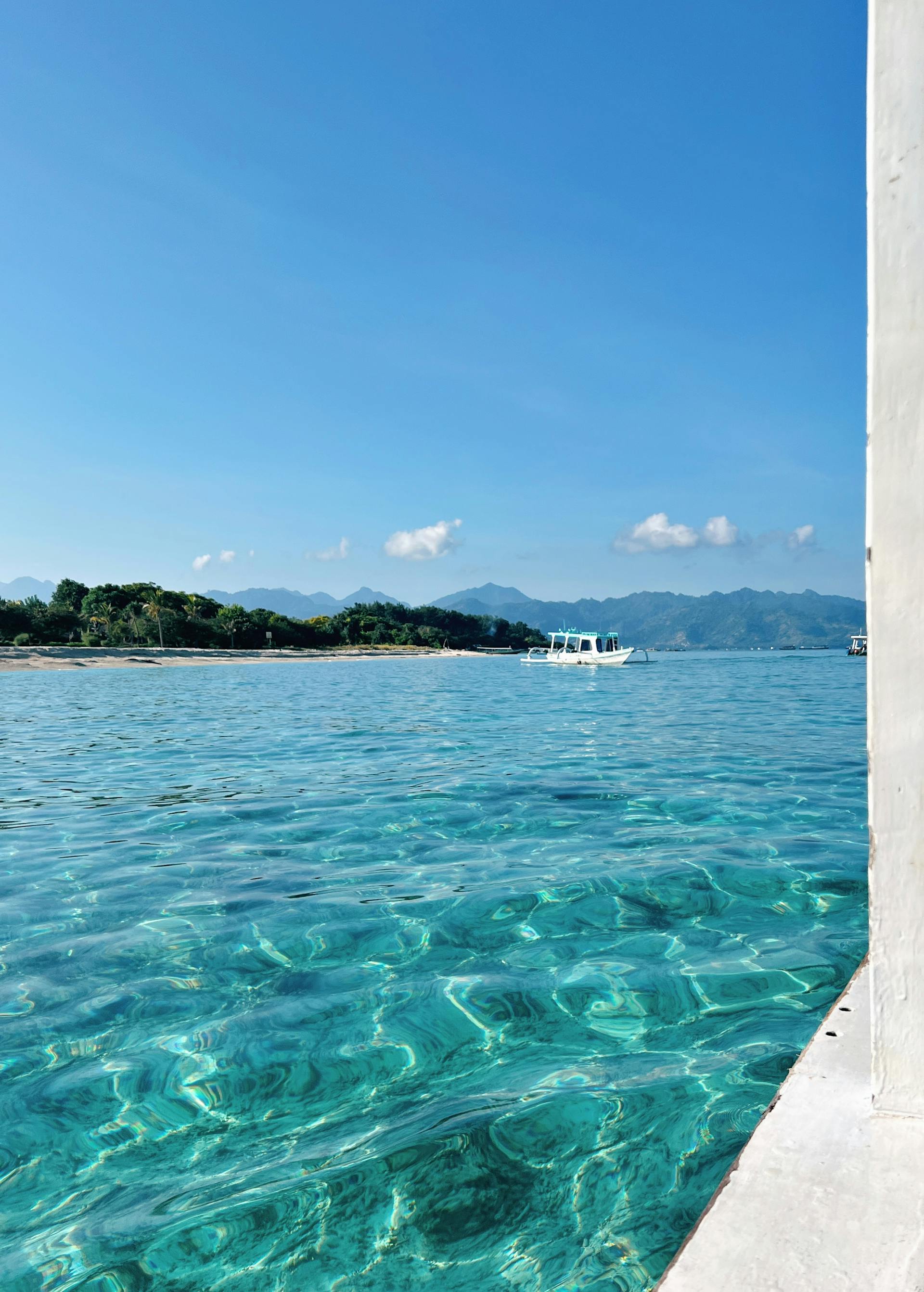
Gili Islands With Kids: Which Island Is Best For Families in 2026
Honest 2026 guide to taking small kids and babies to the Gilis — which island suits which age, ferry logistics, reef safety, and healthcare gaps.
Last reviewed:
The Gili Islands look like a postcard, but with small children they take more planning than the Instagram grid lets on. Trawangan, Air and Meno each suit a very different family, and the ferry from Bali is the single biggest decision you will make on the trip. This is the honest 2026 rundown — which island fits which age, how to survive the fast boat with a baby, what to do about the reef at low tide, and where the healthcare line really sits when you are three nautical miles from the nearest hospital.
The three Gilis in one paragraph
The Gilis sit in a small triangle off the north-west coast of Lombok, an hour or so by fast boat from east Bali. Trawangan is the biggest and busiest, Air is the middle one geographically and in vibe, and Meno is the small, quiet island between them. None of the three has cars or scooters — you walk, cycle, or take a cidomo (small horse cart). All three are within sight of each other, and a public boat hops between them in around 10–15 minutes.
For families, the short answer is: Gili Trawangan if your kids are 5 and up and you want some life in the evenings; Gili Air if you want the easiest middle ground with the best snorkelling off the beach; Gili Meno if you have a baby or toddler and your priority is quiet, shade and slow days. Most families we speak to end up doing two islands across a 4–6 night stay, which is a sensible move.
Before you commit, the practical filter is not "which island looks prettiest" but "how do we get there, and what happens if something goes wrong". So we will start with the boat.
Getting there: ferry logistics from Bali and Lombok
There are two main ways onto the Gilis with kids. From Bali, you drive to Padangbai on the east coast and take a fast boat across the strait — roughly 1.5 to 2 hours on the water depending on conditions, plus the 2–2.5 hour drive from the Kuta/Seminyak side or 1.5 hours from Ubud. From Lombok, you fly into Lombok International (Praya), drive 1.5–2 hours up to Bangsal harbour, and take a much shorter fast boat — around 20 minutes — or the slower public boat for about 30–40 minutes.
With a baby or toddler, the Lombok route is genuinely easier on the water, but harder logistically if your wider holiday is Bali-based. The Bali route gets you there in one piece if you treat the drive as part of the day rather than rushing it. We have a step-by-step breakdown on our Bali airport to Padangbai Gili ferry with car seat page, and the equivalent Lombok airport to Bangsal Gili ferry with car seat route, both of which include ISOFIX seat options for the road legs.
Whichever route you pick, book the fast boat for late morning rather than the 7am dash. The sea is calmer earlier in the day, but the all-in stress of pre-dawn packing with a toddler usually outweighs the smoother crossing. A 10am or 11am boat is the family sweet spot.
Motion sickness, life jackets and the reality of the fast boat
The crossing from Padangbai is on an open ocean swell, not a sheltered channel. On a good day it is bumpy but fine. On a bad day, especially between October and March, it can be a proper roller-coaster, and we have seen entire boats of adults reach for the sick bags. With kids, plan for the bad day and be pleasantly surprised if you get the good one.
Motion sickness medication is the first issue. Most over-the-counter options (the hyoscine and antihistamine-based ones used by adults) are not licensed for children under 3, and in some cases under 6. Do not improvise dosing — speak to your GP or paediatrician before you leave home if you think your toddler is going to struggle. For under-3s the realistic toolkit is: feed them lightly an hour before boarding, sit them mid-boat low down where the motion is smallest, keep their eyes on the horizon if they are old enough to understand, and bring a change of clothes for everyone in a dry bag inside your day pack.
Life jackets are the second issue. Fast boats are legally required to carry them, and they do, but the reality is they are almost always adult-sized. A standard adult life jacket on a 2-year-old will ride up over their head in the water and is effectively useless. If you are even mildly anxious about water safety, bring your own child-sized life jacket from home — they pack flat in a checked bag, and you can use it again on the snorkelling day. This is the single piece of kit we tell every family with under-5s to pack.
Gili Trawangan with a baby or older kids
Trawangan is the biggest of the three and gets unfairly tarred as a party island. The truth in 2026 is more nuanced. The central strip on the east side, near the main harbour, still has a lingering late-night scene — music carries over the water until midnight or later in high season, and you do not want a room there with a baby. But the north coast and the entire west coast are quiet, family-leaning, with proper sunset, wider beaches and bigger resorts that have pools and kids' menus.
For families with kids aged roughly 5 and up, Trawangan is a strong pick. The bicycle loop around the island is about 7km and mostly flat — a doable afternoon adventure with kids who can ride independently, or on a child seat / trailer behind a hired adult bike. There is a swing-in-the-sea photo spot, a saltwater pool at one of the bigger resorts, and enough cafe choice that picky eaters will find something. The snorkelling off the north-west corner is decent for older kids who can manage a mask and fins.
With a baby or under-3, Trawangan is workable but you need to be deliberate about where you stay. Pick the west or north coast, not the harbour strip. Accept that you will be a 15–20 minute walk (or short cidomo) from the main cluster of restaurants for dinner. The upside is more space, quieter beaches at nap time, and a sea breeze that takes the edge off the heat.
Gili Air: the family middle-ground
If you only have time for one Gili and you have kids under 8, Gili Air is the answer for most families. It is smaller than Trawangan, bigger than Meno, and the vibe is firmly in the "barefoot family holiday" zone rather than either party or remote-retreat. The island circumference is around 5km, which is a very doable slow walk with a buggy on the harder-packed paths, or a 45-minute cycle.
The east coast of Gili Air has the best in-water experience for families on any of the three islands. The reef sits close to shore, the water is shallow and clear over white sand, and at high tide you can snorkel directly off the beach without a boat. Turtles cruise through regularly. For a 4-year-old's first proper snorkel, it is genuinely magical and does not require a guided tour.
Accommodation on Air skews to small bungalow-style places rather than big resorts, which is lovely but means fewer kids' clubs and fewer pools. If a pool is non-negotiable for you (and with the Bali heat we understand why), filter accommodation explicitly on that. The cluster of cafes near the south-east corner of the island has the densest cluster of family-friendly food, including proper coffee, smoothie bowls and pasta that toddlers will actually eat.
Gili Meno: the baby and toddler pick
Meno is the smallest, quietest and most undeveloped of the three. There are no nightclubs, no real "strip", and large stretches of the coast where you can walk for 20 minutes and see almost no one. With a baby or a child under 3, this is the island that lets you actually rest.
The famous turtle point on the west side of Meno is the standout attraction. Even from the shore you can often see green and hawksbill turtles in the shallow water, and a short guided snorkel will almost guarantee a sighting. For slightly older kids (5+) who can swim confidently with a mask, this is the most memorable single hour you will spend on the islands.
The trade-off on Meno is amenities. Fewer restaurants, fewer shops, no real pharmacy of any size, and a slightly thinner range of accommodation. If your toddler is in a routine that requires a specific brand of formula or a specific snack, stock up on Bali or Lombok before you cross. There is also no ATM worth relying on — bring cash from the mainland. For a 2-night quiet leg of a longer trip, Meno is hard to beat. For a full week with a fussy 18-month-old, it can feel a touch isolated.
The reef, water shoes, and low tide
The single most underestimated risk for families on the Gilis is the reef at low tide. The beaches that look picture-perfect at high tide reveal a long stretch of dead coral, sea urchins and sharp rock when the water pulls back. Adults pick their way through carefully; kids run, and they cut their feet within minutes.
Water shoes are essential, not optional. Bring a pair for every member of the family, including the baby (yes, they make them tiny). Closed-toe rubber-soled water shoes, not flimsy aqua socks, are what you want. Buy them at home — the selection on the islands is limited and overpriced, and the sizing for European/Australian feet is hit and miss.
The second piece of reef etiquette is to check the tide tables before you plan a swim. The tide swing on the Gilis is significant, and the difference between "lovely shallow paddle" and "we cannot actually get into the water from this beach" is about three hours. Most accommodation will have a printed tide chart at reception; if not, any of the free tide apps will do. Aim for the two hours either side of high tide for swimming with little ones.
Heat, shade and the no-car reality
The Gilis are properly hot. We are talking 30–33C in the shade through the dry season, with very little breeze inside the islands once you move away from the coast. Add the equatorial UV and a child who refuses a hat, and you have a quick path to a meltdown by 11am.
The no-car, no-scooter rule on all three islands is wonderful for safety — there is genuinely nowhere on earth quite like it for letting a 6-year-old wander 10 metres ahead without panic — but it also means you walk everywhere, push the buggy everywhere, or take a cidomo. Cidomos are the small horse-drawn carts that act as taxis. They are part of island culture and they are also, candidly, a welfare concern: the horses work in heat, on hard surfaces, and the standards vary. Use them sparingly, walk where you can, and tip the drivers who clearly look after their animals well. Bicycles with child seats or trailers are widely available to hire and are usually the more comfortable family option for any trip over a few hundred metres.
Plan your days around the sun, not your watch. Beach time before 10am and after 3pm, lunch and a long quiet middle of the day under a fan or in air-con, and a sunset swim. Babies need a UV swimsuit, a wide-brim hat with a chin strap, and reef-safe sunscreen reapplied properly — the sun off the white sand is brutal. The local rule of "no sunscreen, just shade" works fine for under-6-month-olds, but you need to be ruthless about that shade.
Healthcare: the gap you need to plan around
This is the hard truth that does not show up on most travel blogs. There is no proper hospital on any of the Gilis. There are small clinics that can handle minor cuts, mild infections, and basic stitching, but anything serious — a head injury, a bad asthma attack, dengue, a high fever in an infant — means a boat or a helicopter back to Lombok or Bali, and that is not a 20-minute exercise.
The realistic medical evacuation chain is: island clinic stabilises, fast boat to Bangsal (the boats will run outside normal hours for genuine emergencies, but at a cost), ambulance to a hospital in Mataram on Lombok, or onward fast boat / helicopter to Denpasar in Bali where the larger international hospitals (BIMC, Siloam) are. End-to-end, that is anywhere from 3 to 8 hours depending on time of day and weather. In a storm, it can be longer.
What this means in practice: do not go to the Gilis without proper travel insurance that explicitly covers medical evacuation, and read the policy. Bring a parent's medical kit with paediatric paracetamol and ibuprofen at correct dosing, oral rehydration sachets, antihistamines, a good thermometer, and any prescription meds in their original boxes with the script. If anyone in your family has a serious condition — type 1 diabetes, severe allergies, a heart condition — be honest with yourself about whether a few nights on a small island without a real hospital is the right call. For most families it is fine. For some it is not.
Accommodation tips: what to filter for
Three things matter more than anything else when picking where to stay on the Gilis with kids: distance from the noisy strip (on Trawangan especially), whether there is a pool, and whether the property has air-conditioning that actually works through the night. The third one sounds obvious; it is not. Plenty of cheaper bungalows run the air-con on a generator schedule that cuts out at midnight, which is fine for backpackers and miserable for a toddler.
For a baby, ask explicitly about a cot. Most family-tier places have them, but the quality varies wildly. If you are doing a longer Bali-then-Gili trip, it can be easier to bring or hire a travel cot you trust and use it both legs. Our gear rental service delivers travel cots, prams and car seats to your villa or hotel in Bali pre- and post-Gili, so you can travel onto the islands light and pick the cot back up on your return. We do not (yet) deliver to the Gilis themselves — the boat logistics make it impractical — but the Bali bookend covers most of the trip.
Two practical bookings tips. First, book a ground-floor or first-floor room rather than anything up a steep external staircase; with a sleeping toddler on your shoulder at 9pm, you will thank yourself. Second, if you are doing two islands, book the second leg as a refundable rate before you leave — fast boat schedules can shift, and the flexibility is worth the small premium.
When to go and how long to stay
The dry season — May through September — is the family sweet spot. The sea is calmest, the rain is rarest, the visibility for snorkelling is best, and the heat is hot-but-bearable rather than humid-and-soupy. July and August are the busiest months because they line up with Australian and European school holidays; June and September are quieter and almost as good weather-wise. April and October are shoulder months that can go either way.
The wet season runs roughly November to March. It is not unbookable — there are sunny days, and prices drop — but the fast boat crossing is rougher, and the snorkelling visibility is hit and miss. With kids under 5, we would lean towards the dry season unless you have specific reasons to go off-peak.
On length of stay: 4 nights is the minimum that justifies the travel effort, 6 nights is the sweet spot for a single-island stay or a split between two, and 8+ nights starts to feel long with small children unless you are deliberately doing nothing. Most Australian families build it as a 3- or 4-night Gili leg inside a wider 10- to 14-night Bali holiday, which works well.
A realistic day-by-day from arrival to island
Here is what a sensible Bali-side arrival day looks like with kids. Land in Denpasar (DPS) late morning if you can. Clear immigration, collect bags, and meet your pre-booked driver in the arrivals hall. From the airport, the drive to Padangbai is around 2.5 hours in normal traffic, longer if you are unlucky with the late-afternoon Sanur and Gianyar stretches. Break the drive once for a proper lunch and a nappy change — Sanur or the coastal stretch near Candidasa both have family-friendly options.
Stay one night in Padangbai or Candidasa before the boat. This is the single best decision you can make. The fast boats leave early; trying to do airport-to-boat in a single day with a tired baby is brutal, and a missed boat means you are stuck. A relaxed evening in Padangbai, an early but unhurried breakfast, a 10am or 11am boat the next morning, and you arrive on your chosen Gili with the whole afternoon to settle in.
On the way back, do the same thing in reverse. Boat off the island mid-morning, lunch on the Bali coast, and either drive straight to your next Bali base (Ubud, Sanur, Seminyak) or stop a night in Candidasa again if your flight is the following day. We strongly recommend pre-booking a private transfer with an ISOFIX seat for both legs — the difference between that and a kerb-side taxi negotiation with two tired kids and a pile of luggage is enormous.
FAQs
Which Gili island is best for families with a baby? Gili Meno is the quietest and the easiest with a baby under 18 months — fewer crowds, less noise, more shade. Gili Air is the better pick if you want a slightly wider choice of food and accommodation. Trawangan only works with a baby if you stay on the north or west coast, well away from the harbour strip.
Which Gili island is best for families with older kids? Gili Trawangan suits kids aged 5 and up who can ride a bike, snorkel with a mask, and handle a longer day. The island loop, the bigger resort pools and the wider activity choice all play in your favour.
How long is the ferry from Bali to the Gilis with a baby? Around 1.5 to 2 hours on a fast boat from Padangbai harbour on Bali's east coast. Add the 2 to 2.5 hour drive from south Bali, and treat the boat day as a full travel day. From Lombok's Bangsal harbour, the fast boat is around 20 minutes — much easier on the water.
Are car seats and ISOFIX available for the drive to Padangbai? Not with a kerb-side taxi, no. You need to pre-book a private transfer that explicitly offers an ISOFIX seat or a properly strapped booster. Our airport-to-Padangbai transfer includes a child seat in the booking.
Do the fast boats have child-sized life jackets? In our experience, rarely. Boats carry adult life jackets to meet the regulation, but child-sized ones are inconsistent. Bring your own from home for any child under about 6 — they pack flat and you will use it again for snorkelling.
Can I give my toddler motion sickness medication for the crossing? Most common adult medications are not licensed for under-3s and have age limits up to 6 for some formulations. Speak to your GP before travelling rather than improvising. For under-3s, the realistic toolkit is timing, positioning low and mid-boat, light feeding, and a dry change of clothes.
Is there a hospital on the Gili Islands? No. There are small clinics that handle minor issues, but anything serious requires a boat back to Lombok or Bali. Travel insurance with proper medical evacuation cover is non-negotiable for a Gili trip with kids.
Do I need water shoes for the Gilis? Yes, for every member of the family. The reef at low tide is genuinely sharp, and bare feet will get cut within minutes. Buy proper closed-toe rubber-soled water shoes at home rather than relying on what is for sale on the islands.
How do you get around on the Gilis with a buggy? Walking and bicycles only — there are no cars or scooters on any of the three islands. A robust off-road buggy with good wheels handles most of the paths; a flimsy umbrella stroller will struggle. Bike hire with a child seat or trailer is widely available. Cidomos (horse carts) exist but should be used sparingly given the welfare concerns.
When is the best time of year to visit the Gilis with kids in 2026? May through September, with June and September the quietest months inside that window. July and August coincide with school holidays and are busier and pricier. November to March is the wet season — workable but with rougher seas and patchier snorkelling visibility.
Ready to plan the trip? We are a parent-founded private transfer service across Bali and Lombok, and we run the airport-to-harbour leg for hundreds of families heading to the Gilis every year. Pre-book a transfer with a proper ISOFIX seat at balifamilytravels.com, add a travel cot or pram to your booking through our gear rental page for the Bali bookend of your trip, and we will get you to the boat with the kids in one piece — which is more than half the battle.