Canggu With a Baby or Toddler in 2026: An Honest Family Guide
Is Canggu actually family-friendly? An honest, parent-to-parent guide to sub-areas, beach safety, pram-pushability, traffic and pool fences in 2026.
Last reviewed:
Canggu has a reputation problem when it comes to families. Scroll Instagram and you will see surfers, scooters, smoothie bowls and sunset DJs — not exactly the postcard pitch for travelling with a baby. So is Canggu actually a good base for families in 2026, or should you stay in Sanur or Nusa Dua instead? The honest answer is: it depends entirely on which part of Canggu you pick, what age your kids are, and whether you go in with realistic expectations. We have driven thousands of families through this part of the island, and Canggu can be brilliant for families — or quietly miserable — depending on a few key decisions you make before you book the villa.
This is the guide we wish every Aussie, Kiwi and British family had before they landed at Denpasar with a pram, a baby carrier and a slightly underslept toddler. We will walk you through the sub-areas, beach safety, traffic, restaurants, pool safety, drive times and the practical stuff nobody warns you about. No marketing fluff, just what we tell our friends.
The Honest Verdict: Who Canggu Suits, And Who It Doesn't
Canggu is, by Bali standards, young. It is the digital nomad and surfer capital of the island, and the main strips skew toward people in their twenties and thirties without kids. That energy is genuinely fun — great cafes, excellent coffee, beach clubs, live music — but it also means more scooters, more late-night noise on the main roads, and a built environment that was never really designed around prams. If you imagined Canggu would feel like a quiet beach village, you will be disappointed.
That said, plenty of families do extremely well in Canggu, and a growing share of our airport-transfer bookings are families specifically choosing Canggu over Seminyak or Sanur. The reason is simple: the villa stock is excellent, the food scene is unmatched for parents who actually like eating well, and the right sub-area can give you a calm, leafy base with the beach a short walk away. Families with kids aged roughly 4 and up tend to love it. Families with newborns or non-walking babies have a harder time, mostly because of the footpaths and traffic.
Our rough rule of thumb: if you want pram-friendly promenades and gentle swimming, Sanur is still the easier base. If you want lifestyle, cafes, surf lessons for older kids and a villa with a real pool, Canggu wins — provided you pick the right sub-area.
The Sub-Areas: Where to Stay in Canggu With a Baby
"Canggu" is not really one place. It is a loose collection of villages and beach strips, and the difference between them is enormous. Booking the wrong one is the single biggest mistake we see families make. Here is the parent-friendly breakdown.
Berawa is what we recommend most often for families with babies and toddlers. It sits at the southern end of Canggu, closest to Seminyak, and has the densest cluster of family-suitable cafes, supermarkets and a few of the bigger family-oriented venues including Finn's Recreation Club. The beach at Berawa has a row of cafes with shade, sun loungers and direct beach access, which is genuinely useful when you have a baby who needs a nap and a parent who needs a flat white. It is the quietest of the main beachfront areas, and the roads, while still busy, are slightly more manageable than the Batu Bolong strip.
Pererenan is the newer family favourite. It sits at the northern end of Canggu, just past the Echo Beach headland, and over the last few years it has filled with brand-new villas built for the family market — meaning bigger pools, more bedrooms, proper kitchens and slightly better-finished compounds. Pererenan still has a village feel, the beach is quieter than Batu Bolong, and the sunset over the rice fields is honestly one of the nicest in Bali. The trade-off is that it is further from everything, so you will be in the car more.
Echo Beach and Batu Bolong are the busy, buzzy, Instagrammable strips most people picture when they think of Canggu. We would not pick either for a baby. The footpaths are narrow or non-existent, the surf is strong, scooter traffic is relentless, and the noise from the strip carries late. For a couple in their twenties, it is paradise. For a family with a pram, it is daily friction.
Tibubeneng is the inland villa belt — the leafy lanes behind Berawa and along Jl Pantai Berawa. This is where you find the best price-to-villa ratio, often with bigger gardens, but you are not walking to the beach from here. If you take a villa in Tibubeneng, plan on a car for almost every outing.
Traffic Is The Real Challenge
The thing nobody warns Australian families about Canggu is the traffic. The infrastructure has not kept pace with the development, and two roads in particular — Jl Batu Bolong and Jl Pantai Berawa — are frequently gridlocked, especially in the late afternoon and early evening. What looks like a 5-minute drive on the map can easily become 30 to 45 minutes when school finishes and the cafes fill up.
For families this matters more than it does for solo travellers. A bored toddler in a hot car in traffic is its own special kind of holiday. We strongly suggest planning around the peaks: do your outings in the morning, head back to the villa for the midday heat and nap, and only venture out again after about 6pm if you genuinely need to. If you can walk to dinner from your villa, do it.
This is also why your sub-area choice matters so much. Berawa to Batu Bolong is barely two kilometres in a straight line, but in a 5pm traffic jam it can take half an hour. Choose your base near the things you actually want to do most often, not near the things that look glamorous on Instagram.
Beach Safety: What You Need to Know Before You Get In
Canggu's beaches are surf beaches. That single fact changes everything for families. The Indian Ocean here produces consistent, powerful swell, and the dark volcanic sand absorbs heat fast. These are not the calm, lagoon-style beaches you get in Sanur or Nusa Dua.
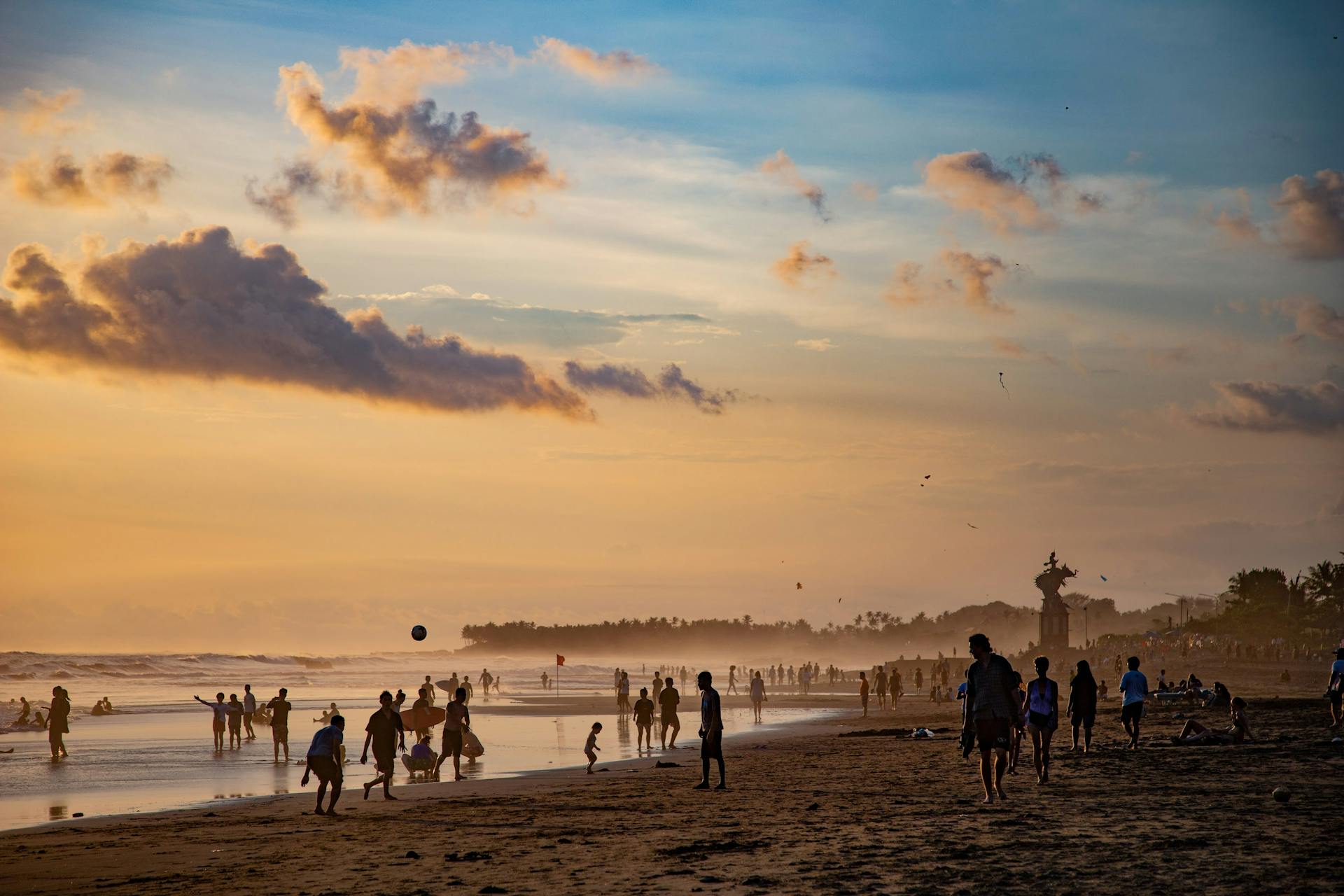
Berawa beach is the most manageable for little kids, and only at low tide, with constant adult supervision. At low tide a wide, flat stretch of sand opens up and the wave break moves well out, leaving shallow pools where a toddler can splash. At high tide, the beach narrows dramatically and the shore break can knock a small child over easily. Check the tide chart every morning before you commit to a beach plan.
Echo Beach has serious rips. Please do not let small children enter the water here, even at the edge. The shape of the reef and headland funnels water back out to sea in ways that catch out even adult swimmers. It is a great spot for sunset and ice cream on the wall, but treat the water as a no-go zone with little ones.
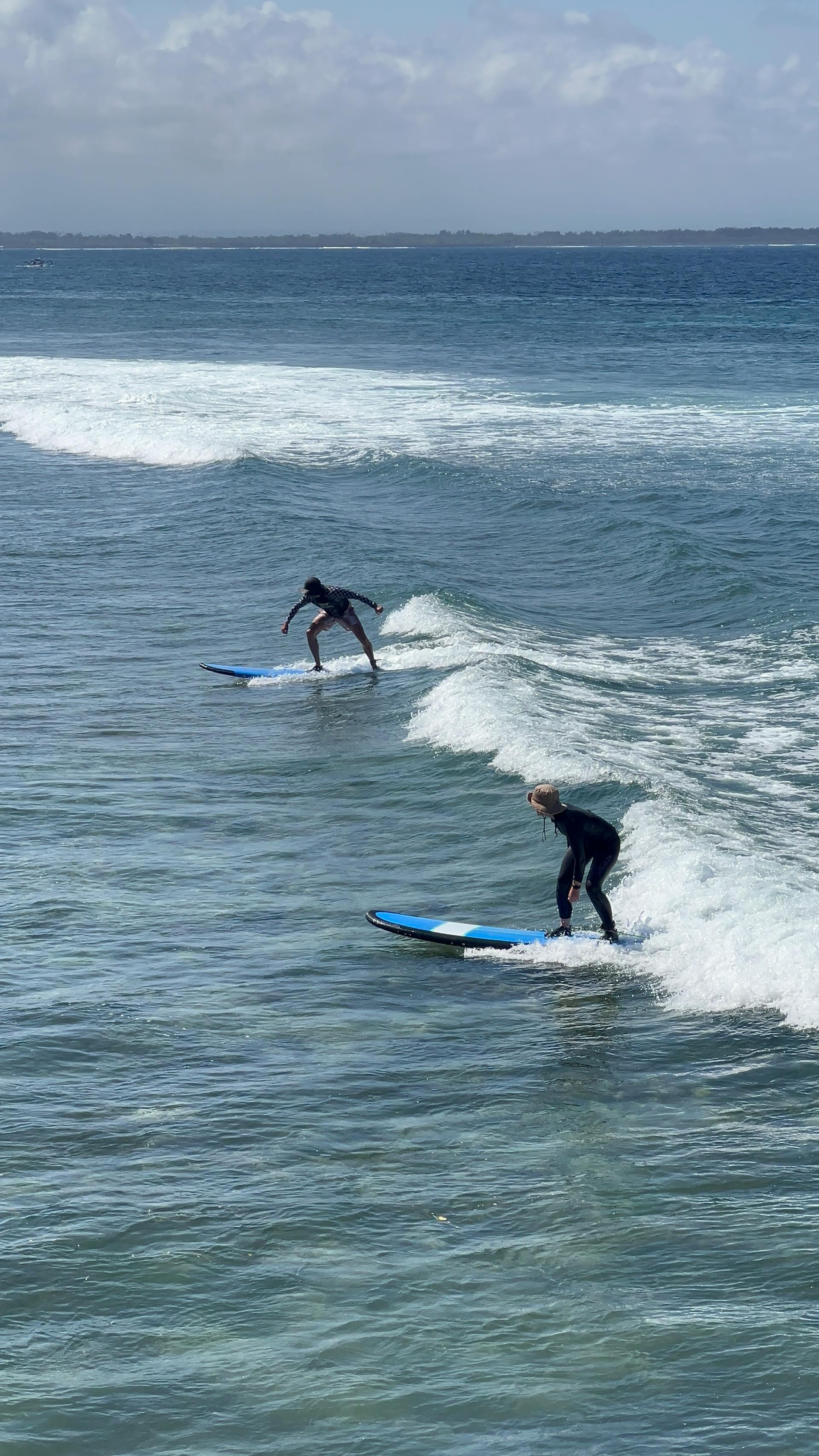
Batu Bolong is a popular learner-surf beach for adults and older kids. The waves are gentler than Echo, but it is busy with boards, and a board hitting a small child is a real risk in the crowded sections. If you want your 5-year-old to try surfing, this is the right beach with the right school — but as a swimming beach for babies, it is not ideal.
Pererenan is quieter and feels more village-like, but still has surf and rips. Treat the water the same way as Echo unless you are with a local who knows the day's conditions.
The simple rule we give every family: in Canggu, the beach is for play on the sand, sunsets and supervised paddling at low tide. For actual swimming with a baby or toddler, use the villa pool.
Pram-Pushability: The Footpath Reality
Canggu's footpaths are a problem. Most streets have a narrow kerbside strip rather than a proper pavement, the surface is uneven, and the open drainage holes — locally called "Bali ankle-breakers" by every expat — are genuinely dangerous if you are not paying attention. We have seen first-time visitors push standard travel prams along Jl Batu Bolong and give up within a block.
If you are bringing a pram from home, bring the most all-terrain one you own. Three big wheels beat four small ones every single time on these roads. A lightweight umbrella stroller will be miserable. If your at-home pram is a city stroller with small hard wheels, leave it at home and hire an all-terrain pram locally — we can sort that through our gear rental service and have it waiting at your villa with the car seat on arrival.
For babies under about 9 months, a soft carrier or structured baby carrier is often more practical than a pram for the short walks around the villa lanes. You will use it more than you expect, particularly if you want to grab dinner at a warung down a side lane where no pram is going to fit.
Family Cafes and Eating Out With Kids
This is where Canggu genuinely shines. The cafe and restaurant scene is the best on the island for families who like real food and good coffee. Most cafes are casual, kid-tolerant by default, and many have either a small play area, a lawn, or open-air seating where a busy toddler is not a problem.
The cluster of family-suitable cafes around Berawa is probably the densest in Canggu — there is a stretch where you can pick from half a dozen places within a short walk, most with high chairs, kid-friendly menus and air-conditioning if you need a break from the heat. The same is true of the newer cafes opening in Pererenan. In Batu Bolong the food is excellent but the venues skew adult, and parking with a pram is harder.
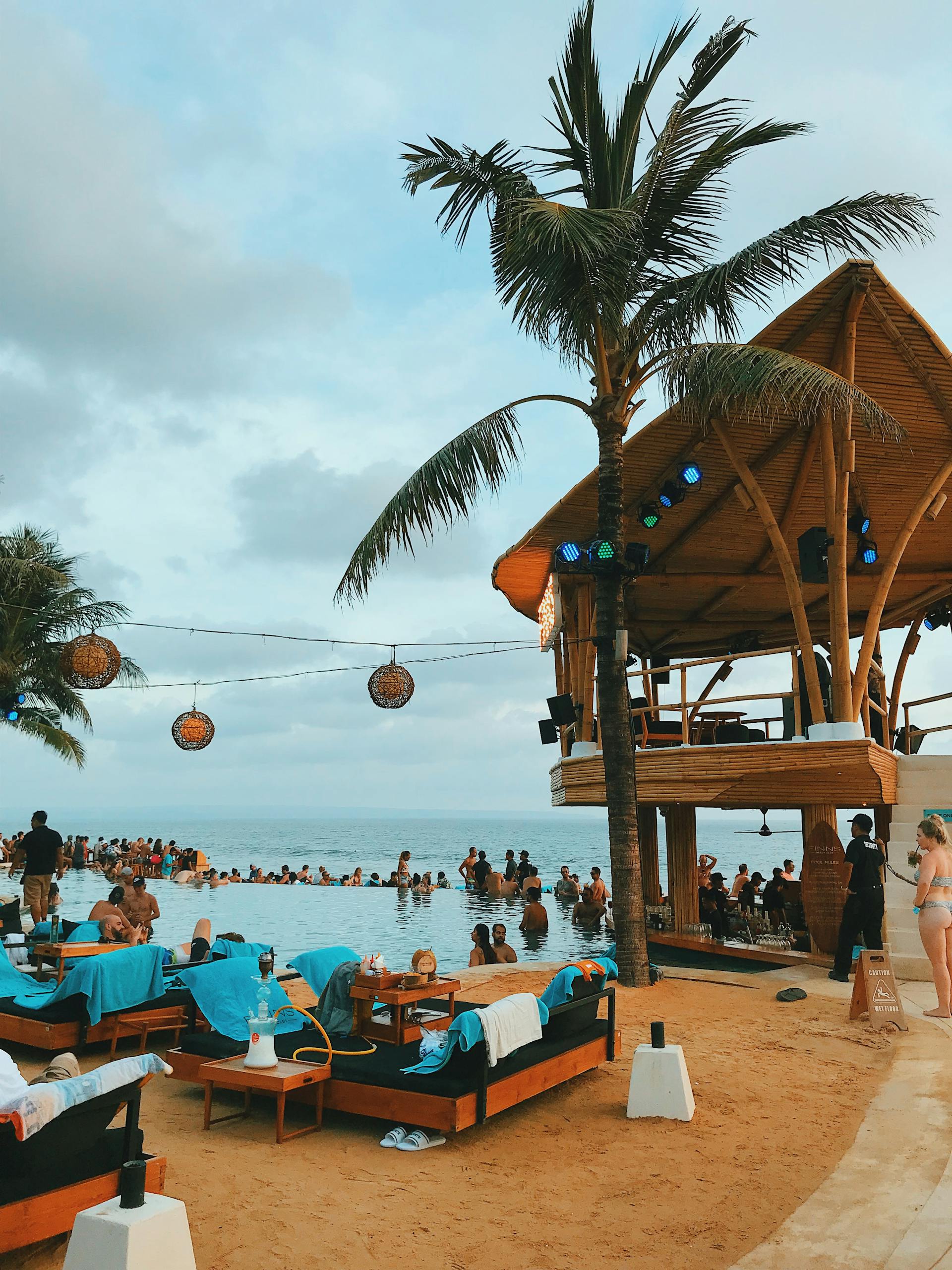
Finn's Recreation Club in Berawa deserves a specific mention because it is one of the few places in Canggu purpose-built for families. There are pools, a kids' club, trampolines, a bowling alley and food across multiple venues, and it is genuinely a lifesaver on a hot afternoon when nobody can face the beach. Day passes are available; you do not need to be staying in a member villa to access it.
For everyday meals, the rhythm we recommend is: breakfast and lunch out at cafes, dinner either at the villa or somewhere within walking distance. Bali nights start to drag for small kids after about 7pm, and a 20-minute traffic-jam drive home with a melting-down toddler is the single fastest way to ruin a good day.
Pool Safety: The Reality Most Villa Listings Hide
This is the single most important section of this guide, so we are going to be blunt. Most Canggu villas do not have a pool fence. The listings will show beautiful infinity pools tiled in dark stone, drop straight off the living-room deck, with nothing between a wandering toddler and the deep end. Drowning is the leading cause of accidental death for under-5s on family holidays in this part of the world, and it is almost always silent and fast.
If you are travelling with a child under about 5 who is not yet a confident, independent swimmer, please do not stay in a villa without a pool fence. The good news is that you do not need to find a villa with one built in, because temporary pool fences are now widely available for rent in Bali, and we strongly recommend booking one. We can deliver and install a mesh pool fence around your villa's pool through our gear rental service before you arrive, and remove it at the end of your stay. The cost is small compared to the alternative.
Even with a fence, the standard pool-safety rules still apply: a designated adult watching at all times when the pool is open, no phones, no "I thought you were watching her", and the fence shut and latched the moment swim time ends. We have unfortunately seen near-misses in our years driving families around Bali, and the common factor is always the same — a moment of distraction and an unfenced pool a few steps away.
Activities That Actually Work With Small Kids
Canggu is not built around kids' attractions the way Nusa Dua is, but there is plenty to fill a week without ever feeling like you are scraping for things to do. The trick is matching the activity to the age.
For kids aged roughly 5 and up, a surf lesson at one of the established schools on Batu Bolong is a brilliant half-day. The instructors are patient, the boards are soft-topped, and the wave they put beginners on is forgiving. Morning lessons before the wind picks up are best. Smaller kids can do a shorter "play in the whitewater" session that is more about confidence than actual surfing.
Rice paddy walks are an underrated family activity. The Subak walking trails inland from Berawa and Pererenan are flat, mostly shaded, and quiet enough that you can hear the irrigation channels and frogs. Go in the early morning before the heat. A baby carrier is essential — these are not pram-friendly paths.
Sunset at Pererenan beach is the calmest family-friendly sunset in Canggu. Bring a sarong, let the kids dig in the sand, grab an ice cream from one of the warungs on the headland. It is genuinely magical, and free, and you will be home for bedtime.
A half-day cooking class is a great rainy-afternoon plan with older kids. Most of the Canggu schools run a kid-friendly version with knife-free prep, plenty of tasting, and the chance to take home something the kids actually made themselves. Ask whether the school can collect you, because the traffic to some of the more rural kitchens is significant.
For active, slightly older kids who need to burn energy, Finn's Recreation Club and the day passes at a couple of the larger beach clubs solve a wet afternoon nicely. We also send a lot of families to Waterbom Bali in Kuta as a day trip — it is about 45 minutes each way in good traffic, but worth it for an older-kid day out.
Drive Times and Getting Around
Canggu's location is convenient on a map and complicated in practice. Here are the realistic drive times you should plan around in 2026, including traffic.
Denpasar Airport (DPS) to Canggu is around 45 to 75 minutes depending on traffic and which part of Canggu you are heading to. Pererenan is the furthest and worst-affected by congestion; Berawa is the closest and quickest. Late-night arrivals (after 10pm) tend to be faster; arrivals between about 3pm and 7pm are routinely the worst.
Canggu to Ubud is around 75 to 90 minutes. We get asked all the time whether families should base themselves in Ubud or Canggu — the honest answer is: both, on different parts of your trip. Splitting a 10-day trip into 4 nights Canggu, 3 nights Ubud, 3 nights somewhere southern is the structure that works for the most families.
Canggu to Seminyak is around 20 to 30 minutes, sometimes longer at peak. Seminyak is your closest "going out for the day" option if you want a change of scene.
For your airport arrival specifically, this is exactly where we strongly recommend pre-booking a transfer with a proper child seat rather than grabbing whatever turns up at the airport rank. The roads between the airport and Canggu are busy, the drivers are skilled but the traffic is not forgiving, and the local "any-car-any-seat" service economy does not include an ISOFIX seat by default. You can pre-book directly via our airport-to-Canggu transfer with baby seat page and have a known driver, a known car and a known seat waiting at arrivals.
Practical Tips Nobody Tells You
Mosquitoes near rice paddies. The Canggu mosquito population is highest at dusk, particularly in the leafy villa lanes inland of the beach. Dengue is present in Bali year-round. Use a repellent containing DEET or picaridin on exposed skin from about 5pm onwards, keep doors closed during dusk, and check your villa has insect screens or mosquito nets over the cots before you commit. We can include a baby-safe repellent in your gear rental kit if you forget to pack one.
Scooter awareness. Canggu has more scooters per capita than almost anywhere else in Bali. They come from all directions, including the pavement, including against the flow of traffic. When you are walking with a pram, treat every driveway, every gap, every blind corner as a place a scooter could appear. Hold a toddler's hand at all times on Jl Batu Bolong and Jl Pantai Berawa — the kerb is not a safe zone.
Food safety. Most Canggu cafes are aimed at international visitors and the food-safety standards are generally good. The usual Bali rules still apply: bottled or filtered water for drinking, brushing teeth and making formula; be cautious with ice from very small warungs; salads and raw vegetables are fine in established cafes but riskier in roadside places. Bring a small supply of oral rehydration salts. Pharmacies are widespread but having electrolytes on hand at the villa for a 3am stomach upset is one of those quiet wins.
Sun and heat. The UV index in Bali sits around 11 to 12 most days — extreme by Australian standards, which is saying something. Hats, rashies and reef-safe sunscreen are non-negotiable for kids. Plan beach time before 10am or after 4pm, and use the villa pool with shade in between.
Cash and ATMs. Most family cafes take card, but smaller warungs, beach vendors and the local market are cash only. Withdraw from the ATMs attached to actual bank branches rather than the standalone ones — card-skimming has been an issue at unattended machines over the years.
SIM cards and connectivity. Pick up a local eSIM or SIM at the airport rather than waiting until Canggu — the data plans are cheap, the coverage is good, and you will want Google Maps and WhatsApp from the moment you land. Most villas have decent Wi-Fi but the streets have patchy coverage.
Sample 5-Night Canggu Family Itinerary
Arrival day: Land at DPS, transfer to villa (45–75 minutes), unpack, dinner in the villa, early night.
Day 2: Slow morning at the villa pool, walk to a Berawa cafe for lunch, beach play at low tide in the afternoon, sunset at Pererenan, dinner local.
Day 3: Morning surf lesson for older kids on Batu Bolong, lunch at the beach, midday nap, Finn's Recreation Club for the afternoon, casual dinner.
Day 4: Day trip to Ubud or to Waterbom Bali, depending on the kids' mood. Either way, leave early and return before peak traffic.
Day 5: Cooking class half-day in the morning, villa pool afternoon, sunset walk in the rice paddies, farewell dinner.
Departure day: Slow morning, late check-out where possible, transfer to airport with car seat pre-booked.
This is the rhythm that has worked for most of the families we have driven over the years, and it leaves enough flex for nap times, weather changes and the inevitable "the toddler refuses everything today" recalibration.
FAQs
Is Canggu suitable for a baby under 1 year old? It can be, if you pick Berawa or Pererenan, hire a pool fence, bring an all-terrain pram or carrier, and accept that you will not be walking long distances on footpaths. Sanur is genuinely easier for babies if pram-pushability is your top priority.
Is Canggu or Seminyak better for families? Seminyak has a slightly more developed family infrastructure and easier footpaths in parts; Canggu has better villas, better cafes and more outdoor space. Most families we drive prefer Canggu for stays of 4 nights or more, and Seminyak for shorter or first-time visits.
How do I get from the airport to Canggu with a baby? Pre-book a private transfer with a proper ISOFIX or harnessed child seat — do not rely on what is offered at the rank. We run direct airport-to-Canggu transfers with car seats included; you can book yours at balifamilytravels.com.
Do Canggu villas have cots? Most do, but the quality varies enormously. Confirm in writing before you book that the cot is a proper travel or full-size cot with a clean mattress. If you have any doubt, hire a known-good travel cot via our gear rental and bring your own sheets.
Is the tap water safe in Canggu? No, do not drink it. Use bottled or filtered water for drinking, brushing teeth and making formula. Most villas have a filtered-water dispenser; ask before you arrive.
Can I hire a pool fence in Canggu? Yes, and you absolutely should if your child is under 5 and not a confident swimmer. We can install a temporary mesh pool fence at your villa for the duration of your stay through our gear rental service.
What is the best time of year to visit Canggu with kids? The dry season from roughly May to September is the easiest — cooler evenings, less rain, lower humidity. The shoulder months of April and October are also great and quieter. December and January are wet, busy and expensive.
Are scooters safe with kids? No. Do not put your child on a scooter in Bali, no matter what you see locals doing. Use a car with a proper child seat for every journey, even short ones. The road environment is not forgiving.
How much should I budget for a family week in Canggu? Villa costs vary wildly depending on season and size, but plan for cafes around AUD 15–30 per adult per meal, kids' meals AUD 8–15, and budget separately for transfers, activities and a gear rental kit if you need one.
Do we need malaria tablets for Canggu? Malaria is not generally a concern in the main tourist areas of Bali including Canggu, but dengue is — and there are no tablets for dengue, just bite prevention. Talk to your GP before you travel, and pack repellent.
Canggu rewards families who plan a little. Pick the right sub-area, fence the pool, bring the right pram, respect the traffic and the surf, and you will have one of the best family weeks of your travelling life. When you are ready to lock in your arrival, pre-book your airport transfer with an ISOFIX child seat at balifamilytravels.com — we will be waiting at arrivals with a known driver, a clean car and the right seat for your little one, and you can start your holiday properly the moment you land.