Why You Can't Find Car Seats in Standard Bali Taxis
Standard taxis and ride-hail cars in Bali almost never carry child seats. Here's why that's the case, what it means for your family, and how to solve it before you land.
Last reviewed:
If you've ever tried hailing a taxi at Ngurah Rai Airport or requesting a ride-hail car in Seminyak, you've probably noticed something alarming: there are no child seats. Not in the boot, not on the back seat, not offered as an add-on. For parents used to strict car seat laws back home, this can be a shock.
It's not an oversight — it's the norm
Indonesia does not enforce child restraint laws for taxis and ride-sharing vehicles the way most Western countries do. Drivers are not required to carry car seats, and most fleet operators don't supply them. The result is an entire transport network that simply isn't set up for young passengers.
This isn't because Balinese drivers don't care about safety. It's a structural gap. Car seats are expensive, require correct fitting for each child's size, and take up passenger space in vehicles that need to serve as many riders as possible throughout the day.
Ride-hail apps won't help either
Grab and Gojek dominate ride-hailing in Bali. Neither app offers a "child seat" vehicle option. When you request a car, you get a standard sedan — no restraint, no anchor points checked, no questions about your child's age or weight. The driver expects adult passengers.
Some parents try to bring their own travel car seat from home. While that solves the seat itself, installing it correctly in an unfamiliar vehicle, on a dark airport curb, after a 12-hour flight with a screaming toddler, is far from ideal.
The lap-hold myth
You'll see it everywhere in Bali: children held on laps in moving vehicles. Locals and tourists alike do it because it feels like the only option. But physics doesn't care about local norms. In a sudden stop at just 40 km/h, an unrestrained child becomes a projectile. A parent's arms cannot generate the force needed to hold a child safely during impact — not even close.
The World Health Organization ranks road traffic injuries as a leading cause of death for children aged 5–14. Proper restraints reduce fatal injury risk by up to 70% for infants and 54% for toddlers. Holding your child on your lap is not a substitute.
What this means for your Bali trip
If you're flying into Bali with a baby, toddler, or young child, you need to plan transport separately from the standard taxi queue. Waiting until you land to "figure it out" means either compromising on safety or spending your first hour in Bali stressed and searching.
The airport taxi rank won't have car seats. The ride-hail cars won't have car seats. Hotel shuttle vans rarely have them either, and when they do, there's no guarantee of correct installation or size matching.
The solution: book a dedicated family transfer
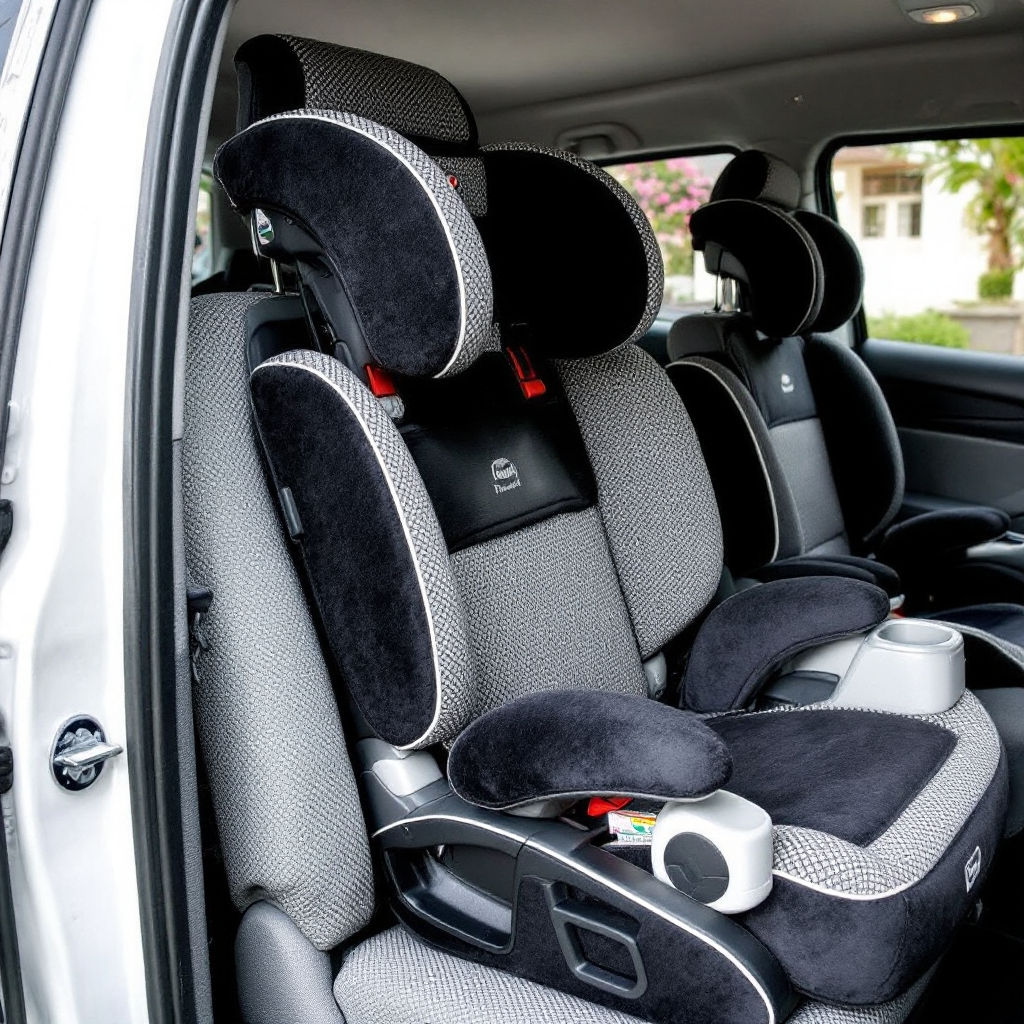
A pre-booked airport transfer with a fitted child seat solves the entire problem before you even board your flight. You choose the seat type (infant capsule, toddler seat, or booster), share your child's details, and arrive to a vehicle that's ready and checked.
Your driver meets you at arrivals with a name sign. The seat is already installed and adjusted. You buckle in, exhale, and start your holiday. No negotiating, no improvising, no risk.
Why we built this service
We started Bali Bali Family Travels because we experienced this exact problem ourselves. Landing in Bali as parents, realising there was no safe option waiting for us, and vowing to fix it for every family that follows. Every car in our network carries a safety-checked, age-appropriate child seat — because that should be the baseline, not the exception.