The Ultimate Guide to Denpasar Airport (DPS) Arrivals with a Baby
A step-by-step walkthrough of Ngurah Rai International Airport arrivals when you have a baby: immigration, baggage, facilities, and getting to your hotel safely.
Last reviewed:
Ngurah Rai International Airport — commonly called Denpasar Airport or just DPS — handles millions of passengers every year. It's modern, reasonably well-organised, and surprisingly manageable with a baby if you know what to expect. This guide walks you through every step from touchdown to hotel transfer.
Arriving at the gate
After landing, you'll taxi to the international terminal. If you checked a stroller at the gate, it will usually be returned planeside or at the oversized baggage belt — ask cabin crew before deplaning. Keep your baby in a carrier for the walk through the terminal; it's faster than waiting for a stroller at the gate.
The walk from gate to immigration takes 5–15 minutes depending on your gate assignment. The terminal is air-conditioned but can get warm in connecting corridors. Have a light muslin or shade cloth ready.
Immigration and visa on arrival
Most nationalities can purchase a Visa on Arrival (VOA) for 500,000 IDR (approximately $30 USD). Children, including infants, need their own VOA if they're on a separate passport. If your baby is on your passport, they're covered under your visa.
The VOA counters are before the immigration desks. Pay by card or cash (IDR or USD accepted). After payment, proceed to the immigration queue. Family lanes aren't always marked, but officers are generally accommodating if you're visibly traveling with a baby — don't hesitate to ask.
Total time through immigration varies from 15 minutes to over an hour during peak arrivals (typically 8–11 PM when European and Australian flights cluster). Factor this into feeding and nap schedules.
Baggage claim
Baggage carousels are on the ground floor, a short walk from immigration. Trolleys are free and plentiful. If you gate-checked a stroller and it wasn't returned planeside, check the oversized baggage area at the far end of the hall.
Tip: if one parent grabs bags while the other finds a quiet corner to feed or change the baby, you'll move through much faster. There's a small seating area near the carousels that works for a quick feed.
Baby-changing and nursing facilities
DPS has baby-changing tables in several restrooms throughout arrivals. They're basic but functional — a fold-down table with no frills. Bring your own changing mat and supplies.
There is no dedicated nursing room in the arrivals hall, but the airport is generally relaxed about breastfeeding. A nursing cover or light wrap gives you privacy anywhere. If you want more seclusion, the prayer rooms (mushola) near arrivals are quiet and private.
Customs and the green channel
After collecting bags, you'll pass through customs. If you have nothing to declare, take the green channel. Baby formula, sealed baby food, and nappies in reasonable personal quantities are fine to bring through. Officers rarely stop families, but keep items accessible in case they ask.
Note: Indonesia restricts certain medications. If you're carrying prescription medicine for your baby, bring the prescription or a doctor's letter to avoid questions.
Exiting arrivals: what you'll see
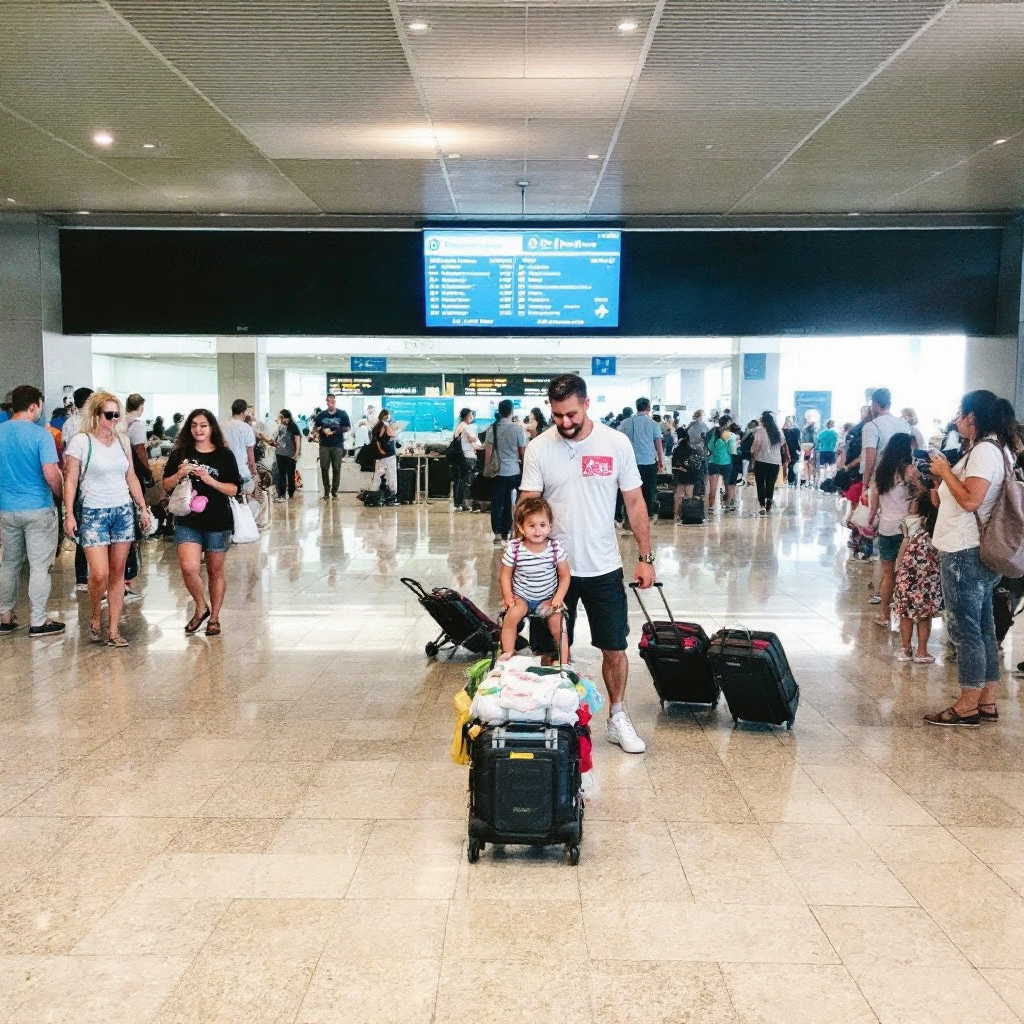
Once through customs, you step into the public arrivals hall. It's loud, crowded, and full of drivers holding signs, tour operators, and taxi touts. This is where the chaos hits — especially at night with a tired baby.
If you've pre-booked a transfer, your driver will be here with a name sign. Look for them immediately to the left or right of the exit doors. Most services send you a WhatsApp message or photo of the driver beforehand so you know who to find.
Getting to your hotel: your options
Pre-booked transfer with baby seat (recommended): Your driver is waiting, the car seat is installed, and you're on your way within minutes. This is by far the safest and least stressful option with a baby. Book before you fly.
Airport taxi rank: Official airport taxis (blue or silver) operate on a prepaid counter system. They're metered or fixed-price depending on destination. None carry child seats. You'll need to hold your baby on your lap.
Ride-hail (Grab/Gojek): These apps work at DPS, but pickups are restricted to a designated area outside the terminal. You'll need to walk with all your luggage and baby to the pickup zone. No child seats available.
Hotel shuttle: Some resorts offer airport shuttles. Ask in advance whether they provide a child seat — most don't, and the ones that do may not match your child's size requirements.
Drive times from DPS to popular areas
Expect these approximate drive times from Ngurah Rai, though traffic — especially between 4–8 PM — can double them:
Seminyak: 30–45 minutes. Canggu: 45–75 minutes. Ubud: 60–90 minutes. Uluwatu: 30–50 minutes. Nusa Dua: 20–30 minutes. Sanur: 25–40 minutes.
For longer drives (Ubud, Canggu), a rear-facing infant seat is essential. Babies should not be held on laps for trips over 15 minutes — or any trip, frankly.
Packing checklist for DPS arrivals with a baby
Keep these in your carry-on for the arrivals process: passport and VOA cash/card, baby carrier or sling, light muslin for shade and nursing, changing supplies and nappies, one change of baby clothes, pre-mixed formula or snacks (for toddlers), phone with driver's WhatsApp contact, and a refillable water bottle (fill after customs).
Final tip: book your transfer before you fly
The single best thing you can do to make DPS arrivals smooth with a baby is to have your onward transport sorted before you leave home. A pre-booked transfer with a fitted child seat means no queuing, no negotiating, and no compromise. You walk out of arrivals, find your driver, and breathe.