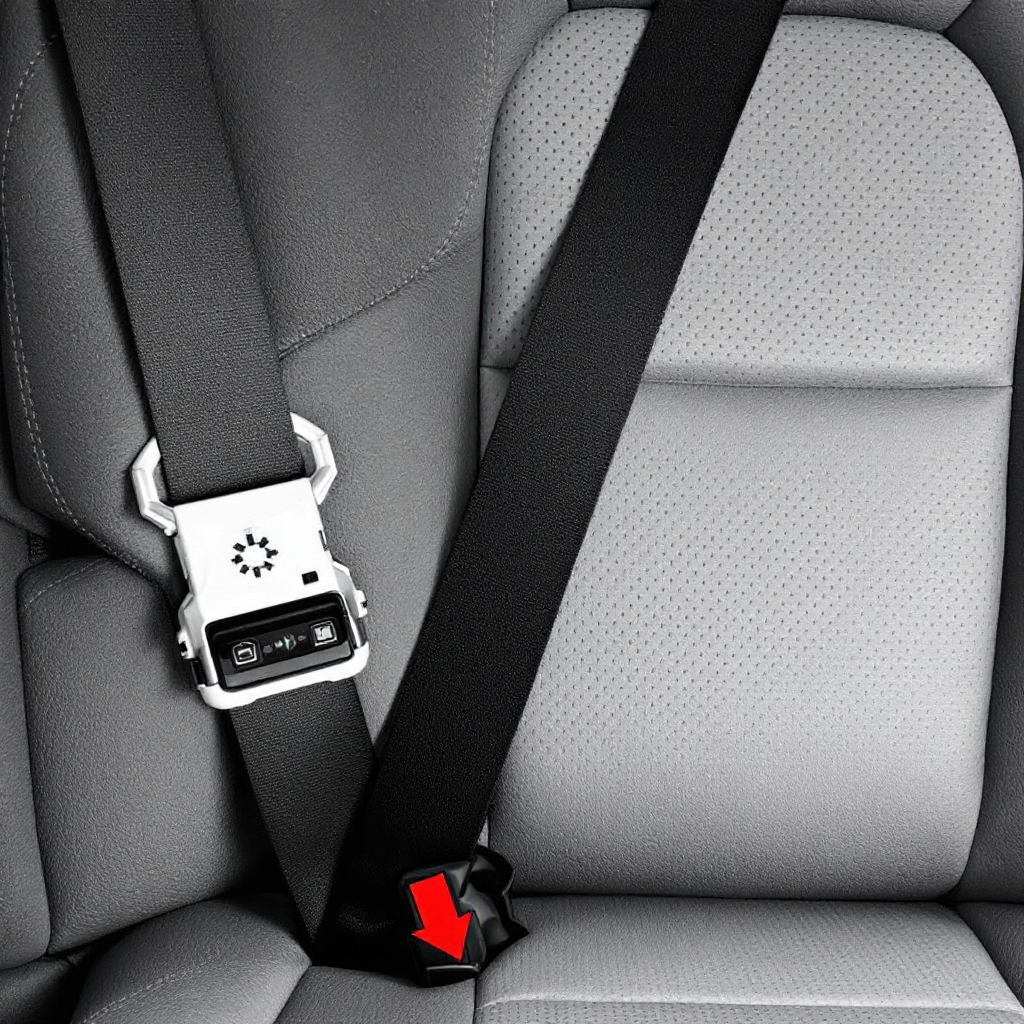
ISOFIX vs. Seatbelt Installation: How We Secure Your Child in Bali
A technical look at the two main ways to install a child car seat — ISOFIX anchors and seatbelt routing — and how we choose the right method for every booking.
Last reviewed:
When you book an airport transfer with a child seat, you probably don't think much about how that seat is attached to the car. But installation method is one of the most important factors in child passenger safety. A seat that's installed incorrectly — even a top-rated one — can fail to protect your child in a collision. Here's how the two main systems work and how we handle them in Bali.
What is ISOFIX?
ISOFIX (also known as LATCH in North America) is a standardised anchoring system built into the vehicle. Two metal anchor points are located in the gap between the seat base and backrest, and a child seat with matching connectors clicks directly into them. Many newer seats also include a top tether or support leg for additional stability.
The key advantage of ISOFIX is that it creates a rigid, metal-to-metal connection between seat and vehicle. There's very little room for user error. When the connectors click in and the indicators turn green, the seat is locked. No belt routing, no tension adjustment, no guesswork.
ISOFIX has been standard in European vehicles since 2014 and is increasingly common in Southeast Asian markets. However, not every car in Bali has ISOFIX points — especially older models and some MPVs.
What is seatbelt installation?
Seatbelt installation uses the vehicle's existing three-point seatbelt to secure the child seat. The belt is threaded through specific routing guides on the seat shell, pulled tight, and locked. When done correctly, seatbelt installation provides strong protection — many crash-tested seats perform excellently with belt-only fitting.
The challenge is that "done correctly" is doing a lot of heavy lifting in that sentence. Studies consistently show that a large percentage of seatbelt-installed child seats have at least one critical fitting error: belt threaded through the wrong guide, insufficient tension, or the locking clip not engaged. Each error reduces the seat's ability to restrain your child during sudden deceleration.
Seatbelt installation requires training, attention to detail, and a check routine every time the seat is moved to a different vehicle. It works — but only when it's done right.
Which method is safer?
In controlled crash testing, both systems perform at similar levels when installed correctly. The real-world difference is in error rates. ISOFIX dramatically reduces the chance of incorrect installation because the system is binary: it clicks in, or it doesn't. There's no ambiguity.
Seatbelt installation, by contrast, has many possible failure modes. A 2019 study published in the journal Injury Prevention found that nearly 60% of seatbelt-installed child seats had at least one significant misuse. For ISOFIX seats, that figure dropped to under 20%.
For official guidance on correct use and common errors, see NHTSA’s car seat and booster seat resources and the UNECE ECE R44 regulation text.
The takeaway: ISOFIX is not inherently "better" than seatbelt installation, but it is much harder to get wrong. When professional installation is part of the service — as it is with us — both methods deliver strong results.
How we choose the method for your booking
When you book a transfer with Bali Booking, we match the installation method to the vehicle assigned to your trip. Here's our process:
Step 1: Vehicle check. We verify whether the assigned vehicle has working ISOFIX anchor points in the rear seats. Anchor presence, condition, and accessibility are confirmed.
Step 2: Seat compatibility. We match the child seat model to your child's weight, height, and age. If the seat and vehicle both support ISOFIX, that's our default choice.
Step 3: Seatbelt as backup or primary. If ISOFIX isn't available in the vehicle — which happens with some older Toyota Avanza and Suzuki Ertiga models common in Bali — we use seatbelt installation with our trained fitting protocol. The driver follows a checklist: correct belt path, tension test, locking clip engagement, and movement check (less than 2.5 cm of lateral play at the belt path).
Step 4: Final check. Before you and your child get in, the driver performs a final visual and physical check. The seat should not move more than an inch in any direction when pulled firmly at the belt path.
Our car seat inventory
We carry seats that support both ISOFIX and seatbelt installation, giving us flexibility across our vehicle fleet:
Infant capsules (0–12 months, up to 13 kg): Rear-facing with ISOFIX base or seatbelt fitting. Reclined at the correct angle for newborn airway protection.
Toddler seats (9 months–4 years, 9–18 kg): Forward- or rear-facing depending on age and weight. Five-point harness with ISOFIX connectors and top tether, or seatbelt routing with locking clip.
Booster seats (4–12 years, 15–36 kg): High-back boosters that position the vehicle's three-point belt correctly across the child's shoulder and hips. These always use the vehicle seatbelt as the restraint mechanism — the booster itself guides belt geometry rather than anchoring independently.
Common questions from parents
"Can I request ISOFIX specifically?" Yes. Let us know at booking and we'll assign a vehicle with confirmed ISOFIX anchor points. If vehicle availability changes, we'll notify you before your trip.
"Is seatbelt installation less safe?" Not when done by a trained installer. The risk comes from DIY installation without checking belt routing and tension. Our drivers are trained on both methods and follow a fitting checklist every time.
"What if I'm bringing my own seat from home?" We can usually accommodate your seat if you confirm the model and installation type in advance. We'll check vehicle compatibility and install it for you on arrival. Bringing your own seat is fine — just make sure it hasn't been in a prior collision, and that the harness and shell are in good condition.
"Do you use second-hand seats?" Our seats are purchased new, inspected regularly, and retired according to manufacturer expiry guidelines. Child car seats have a usable lifespan (typically 6–10 years from manufacture date), after which the shell material can degrade. We track this for every seat in our fleet.
Why installation quality matters more than brand
Parents often spend hours researching which car seat brand to buy. That research matters — but it matters far less than whether the seat is installed correctly. A mid-range seat installed perfectly will outperform a premium seat installed loosely every single time.
That's why we focus on training, checklists, and vehicle matching rather than just stocking expensive seats. The method, the process, and the final check are what keep your child safe on Bali's roads.
Book with confidence
When you book a family transfer with Bali Booking, installation quality is built into the service. You don't need to worry about anchor points, belt routing, or harness tension — that's our job. You just need to tell us your child's age, weight, and height, and we'll handle the rest.